
Own Your Wealth:
10
Smart Financial Moves for Women
Wealth creates choices when you know what you own, how it supports your life, and whom you want it to help. Faye Sykes ’93, President and Wealth Manager at Tuttle Wealth Partners, prepared these ten moves for Orange Women, Smart Money, a conversation for Syracuse University alumnae and friends.
You don’t need to tackle all ten. Read through, notice which ones raise a question for you, and start there.
INDEPENDENCE NOW
Know your financial independence number.
“Do I have enough?” is hard to answer because “enough” has no finish line. A more useful question: what level of assets and reliable income would let you maintain your lifestyle on your own?
That number matters in retirement. It also matters when you’re weighing a career change, stepping away from work to care for family, or facing divorce or widowhood. Knowing it gives you choices to say yes or no, stay or go.
Build a tax strategy, not just an investment strategy.
Two portfolios with the same returns can leave you with very different amounts to spend, depending on where the money sits. Accounts generally fall into three groups:
- Taxable accounts, like a brokerage account
- Tax-deferred accounts, like a traditional IRA or 401(k)
- Tax-free accounts, like a Roth IRA
Which account you draw from first, whether you convert to Roth in lower-income years, when you realize capital gains, and how you give to charity all affect what you keep. Over decades, those choices add up.
Know what you own and why you own it.
Accounts collect over a lifetime: an old 401(k) from a former employer, an insurance policy bought years ago, an inherited investment. You should be able to explain the purpose of each one. Complexity isn’t the same as sophistication, and sometimes a simpler setup is the stronger plan.
Then run a “financial fire drill.” If something happened to you tomorrow, could the people you’ve chosen find everything they need within 24 to 48 hours?
Stay fluent in your household finances.
In many households, one person handles the money. That can work well, right up until the other person suddenly needs to step in.
Whether you’re married, partnered, or managing money with family, know:
- Where assets are held and how accounts are titled
- Who the advisers are
- How to access accounts
- What the household needs each month
Staying fluent doesn’t mean taking over. It means you could step in with confidence if you ever needed to.
CARING FOR FUTURE YOU
Plan for a long life, including care.
Women tend to live longer than men. That makes longevity one of the most important assumptions in your plan. Test your plan into your 90s, and account for inflation, rising healthcare costs, and the possibility of living alone.
Long-term care is the piece many plans skip. Three questions are worth answering now:
- How would care be paid for? Options include savings, insurance, or a combination. If insurance isn’t the right fit, there are other approaches.
- Where would you prefer to receive it? At home, in a community, or in a facility?
- Who would help coordinate it?
Answering early usually leaves more options open. The availability and cost of long-term care insurance depend on your age and health when you apply.
Review your estate plan before you think you need to.
The core documents are a will or trust, a durable power of attorney, and a healthcare directive. Just as important are beneficiary designations on retirement accounts and life insurance. These generally pass outside your will, so an outdated form can send assets somewhere you no longer intend.
Review your plan after major life changes: marriage, divorce, a death in the family, a new grandchild, or a move to another state. Work with an estate planning attorney on the documents, and make sure your financial accounts match what those documents say.
Treat Social Security, Medicare, and taxes as connected decisions.
When you claim Social Security, how you draw from retirement accounts, whether you complete Roth conversions, and how much taxable income you recognize can all affect one another.
A few connections are easy to miss:
- Survivor benefits. For married couples, the higher earner’s claiming age can affect the survivor benefit the other spouse receives later.
- Medicare premiums. Higher modified adjusted gross income can increase Medicare Part B and Part D premiums through the income-related monthly adjustment amount, or IRMAA.
- The two-year lookback. IRMAA is generally based on your tax return from two years earlier. A large Roth conversion or capital gain today can raise your premiums down the road.
Coordinate these decisions rather than making each one in isolation.
Protect your decision making.
Choose the people who would act for you with care. That includes your agent under a power of attorney, your healthcare proxy, and your trustee. Pick them for their judgment, not out of obligation, and document your wishes so they can follow them.
Many financial firms let you name a trusted contact person on your accounts. The firm can reach out to that person if it can’t contact you or has concerns about possible fraud. A trusted contact cannot make transactions on your behalf.
Scams often rely on urgency. A personal rule helps: verify any large or unexpected money request independently, using a phone number you already know, before moving money or sharing financial information.
WEALTH WITH PURPOSE
Make giving part of your financial plan.
If causes matter to you, cash may not be the most tax-efficient way to give. Depending on your circumstances, other options may fit better:
- Appreciated securities. Giving investments held long term may let you avoid tax on the built-in gain.
- Donor-advised funds. You can contribute now and recommend grants to charities over time.
- Qualified charitable distributions. Beginning at age 70½, a distribution sent directly from an IRA to a qualifying charity may be excluded from income and may count toward a required minimum distribution. QCDs generally cannot go to a donor-advised fund.
- Charitable trusts, beneficiary designations, and planned gifts. These can make giving part of your long-term estate plan.
If Syracuse University is part of that picture, you can explore University priorities at giving.syr.edu.
Use wealth to create options.
The goal isn’t the biggest portfolio. It’s being able to make decisions about your time, family, career, care, and generosity without money making them for you.
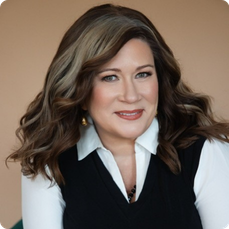
Talk It Through with Faye
If one of these moves raised a question about your own situation, Faye offers a complimentary first conversation.
As President of Wealth Management at Tuttle Wealth Partners, Faye helps individuals, families, and business owners connect the different parts of their financial lives—from retirement income and Social Security to investments, insurance, tax-aware planning, and estate and legacy considerations.
Her approach is collaborative and practical: helping clients understand their choices, ask better questions, and take an active role in their financial future.
Faye is a proud Syracuse University graduate and previously served as Orange Engagement Co-Chair on the Syracuse University Atlanta Board.
Schedule a Conversation with Faye Email Faye